
Building as an Act of Care: What Abundance Gets Right and Misses

Abundance is a book about wanting more, but not more in the greedy, gadget‑counting way. It’s about having enough homes, enough power, enough trains and wires so people can move and breathe without that constant background hum of “not enough” in the system.
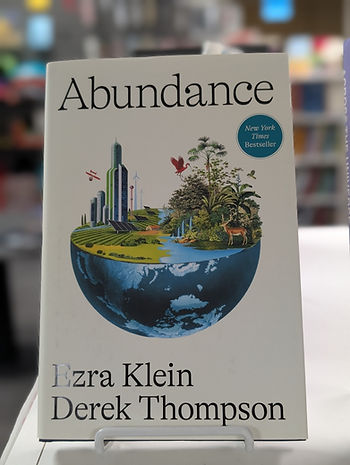
Klein and Thompson walk through America like you’d walk through an old house as a builder, not a tourist. Every room has a stuck door. Housing jammed by zoning and lawsuits. Clean energy stalled in queues and hearings. Trains planned but never built. The pattern is painfully familiar: we know how to fix the house; we’ve built a bureaucracy that won’t let us pick up the hammer.
They argue the real scarcity isn’t capital or ideas, it’s permission. We’ve engineered a culture of “no” that dresses up as process, risk management, and community input. Agencies, courts, neighborhood meetings—each one a tiny veto, “Not here, not now, not like that.” Accumulate enough of those and you don’t just slow projects; you reset the whole fitness function of the country away from building.
Where the book works best is in treating building as an act of care, not just GDP. A transmission line stops being steel and cable and becomes a promise that the grid will hold when the weather goes weird. A vaccine delivered in months is an institution remembering, briefly, why it exists—and behaving accordingly.
They want a government that doesn’t just write rules but ships outcomes. A state that can tolerate some noise, hire real experts, and grant them enough discretion to move instead of drowning them in checklists and CYA memos. When they point to moments like Operation Warp Speed, you feel that familiar operator’s ache: this is what it looks like when the machine’s incentives line up, and how rarely we let that happen.
The blind spots are there. The book doesn’t dig deeply into the incumbents who profit from delay, or the communities that have learned “development” often means displacement. The equity question—abundance for whom, and on whose land—hovers just offstage more than it should.
But when you close Abundance, you’re left with a clean, stubborn operator question: in energy, housing, infrastructure, institutional competence, why have we allowed “no” to become the default state of the system? And what would it take, structurally—not rhetorically—to reset that fitness function so that saying “yes” to useful things being built is once again the most natural move?


Ooh this looks like a great recommendation Arun, thanks for the share!